
Cardiac and Coronary Artery Computed Tomography and Its Role in Diagnosing Heart Disease
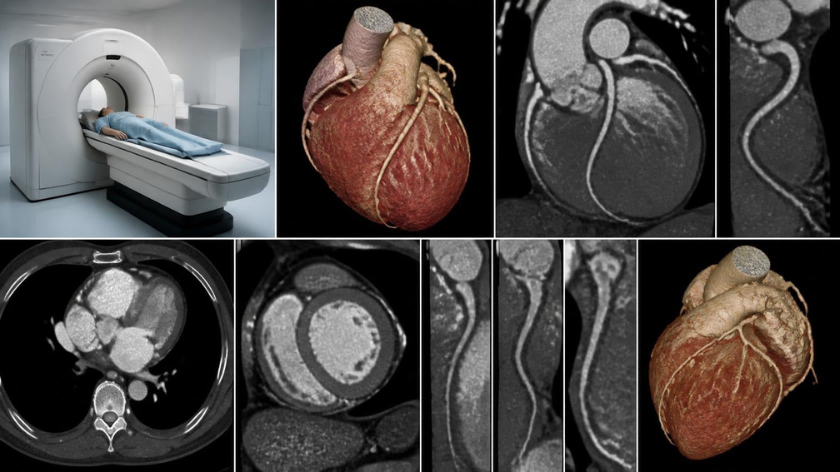
Cardiac and Coronary Artery Computed Tomography and Its Role in Diagnosing Heart Disease
Cardiac and coronary artery computed tomography (CT) is a modern technique that enables doctors to obtain precise, non-invasive images of the heart and coronary arteries. This type of imaging has become an important tool in evaluating certain patients who have symptoms or risk factors for coronary artery disease.
What is coronary artery computed tomography?
It is an examination based on computed tomography (CT) to produce detailed images of the heart and coronary arteries. The examination can help detect deposits within the arteries and assess the presence of narrowing or blockage.
Computed tomography (CT) can also be used to assess the calcium levels in the coronary arteries. This may help assess the risk of heart disease in some people.
When does the doctor order this test?
A coronary artery CT scan may be requested when symptoms such as chest pain are present, or when it is necessary to assess the likelihood of coronary artery disease. The decision to perform the test depends on the patient’s age, symptoms, risk factors, and the results of other tests.
Computed tomography (CT) may be useful in certain cases where it is important to obtain a clear image of the arteries without resorting directly to diagnostic catheterization.
What information does imaging provide?
The examination can help identify the presence of deposits and narrowings within the coronary arteries. It also provides anatomical information about the heart and arteries. This information helps the cardiologist determine the next step. Whether it involves follow-up, pharmacological treatment, or additional tests.
Can a CT scan replace a catheterization?
Not in all cases. Diagnostic catheterization allows the doctor to directly access the coronary arteries. In some cases, it can shift from a diagnostic procedure to a therapeutic intervention within the same session.
Computed tomography (CT) is a non-invasive examination. It is used according to the patient’s condition and the purpose required for the assessment.
The importance of integrated assessment
The diagnosis of coronary artery disease does not depend on a single image. Rather, it is a combination of symptoms, medical history, risk factors, and the results of various tests. Computed tomography (CT) of the heart and coronary arteries helps provide additional information that may be important when choosing the appropriate treatment plan.