
Interventional cardiology and the role of catheterization in treating heart disease
Interventional cardiology and the role of catheterization in treating heart disease
Interventional cardiology is one of the advanced specialties in cardiology, and focuses on diagnosing and treating many diseases of the heart and arteries using catheters and modern interventional techniques. The great development in this field has contributed to providing effective treatment options for many patients without the need for open-heart surgery in some cases.
What is meant by cardiac catheterization?
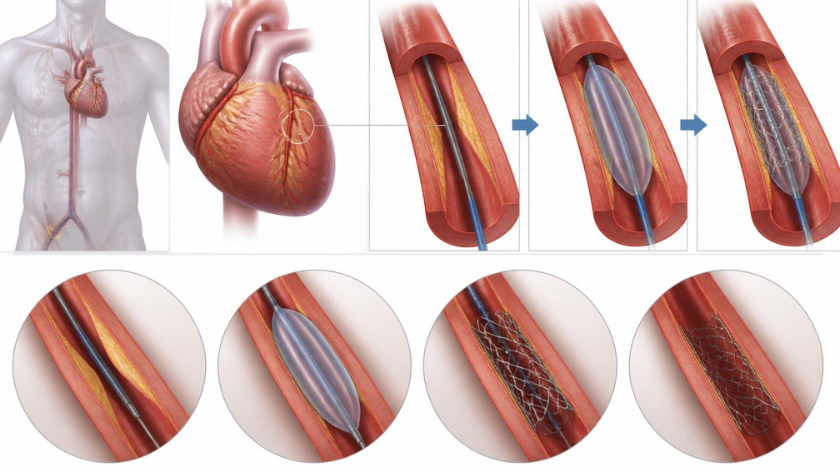
Cardiac catheterization is a medical procedure in which a thin, flexible tube is inserted through a blood vessel and guided to the heart or coronary arteries. Catheters can be used to diagnose artery conditions or to perform therapeutic interventions when narrowing or blockage is present.
Interventional catheterization is widely used in the treatment of coronary artery disease, especially when there is significant narrowing of blood flow to the heart muscle.
When does a patient need interventional catheterization?
A cardiologist may recommend interventional catheterization when tests show significant narrowing of the coronary arteries, or when a patient experiences persistent symptoms despite medication. Catheterization is also used urgently in certain cases of heart attacks.
Common procedures during interventional catheterization include widening the artery using a balloon, then placing a stent to help keep the artery open and improve blood flow.
Benefits of interventional cardiology
One of the main advantages of catheter-based interventions is that they are often less invasive than traditional surgery and can help reduce recovery time and hospital stay in appropriate cases. However, the choice between catheterization and surgical treatment depends on each patient’s individual condition, the number of affected arteries, the location and severity of the narrowing, and other factors.
The importance of medical expertise
Some heart conditions require advanced expertise in interventional catheterization, especially complex cases, chronic blockages, or involvement of multiple arteries. Therefore, the success of the procedure depends on a thorough assessment of the patient’s condition and the selection of the appropriate technique.
The primary goal of interventional cardiology remains to improve blood flow to the heart muscle, alleviate symptoms, and reduce the risk of complications, while selecting the most appropriate treatment for each patient.