
Primary catheterization for treating heart attacks and its importance
Primary catheterization for treating heart attacks and its importance
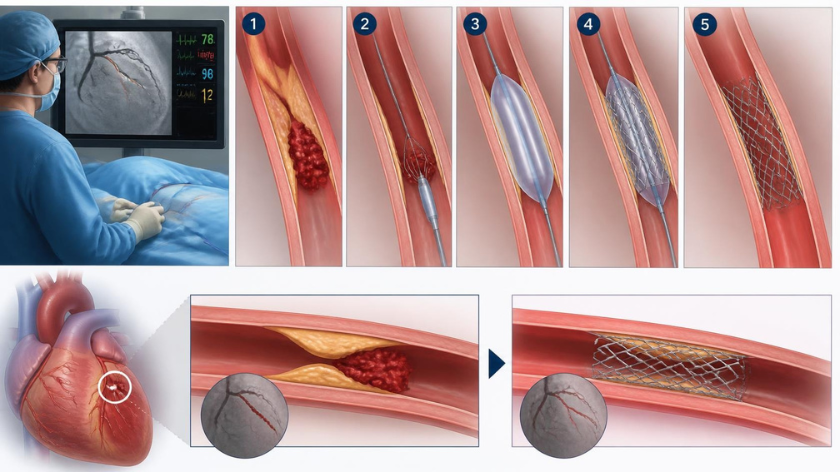
Primary angioplasty is one of the most important medical procedures used in treating certain cases of acute myocardial infarction. This procedure aims to reopen the blocked coronary artery and restore blood flow to the heart muscle as quickly as possible.
What happens during a heart attack?
A heart attack occurs when blood flow to a part of the heart muscle is suddenly reduced, often due to a blood clot blocking one of the coronary arteries. If the blockage persists, heart muscle cells begin to be damaged due to lack of oxygen.
For this reason, time is of the essence in the treatment of a heart attack, and the patient needs to be assessed and treated urgently.
What is a primary catheterization?
Primary angioplasty is an interventional procedure in which a blocked coronary artery is accessed using a special catheter, and then an attempt is made to open the blockage and restore blood flow. The narrowed area may be widened using a balloon, and a stent may be placed to keep the artery open.
Why is the speed of treatment important?
The longer an artery remains blocked, the greater the risk of heart muscle damage. Therefore, prompt access to the hospital, early diagnosis, and initiation of appropriate treatment can help minimize the extent of damage and improve the chances of recovery.
Symptoms of a heart attack
The most prominent symptom is severe chest pain or pressure, which may radiate to the arm, shoulder, jaw, or back. This may be accompanied by shortness of breath, sweating, nausea, dizziness, or a sudden feeling of exhaustion.
If symptoms appear that may indicate a heart attack, emergency medical care should be sought immediately and not wait until the symptoms disappear.
Post-primary catheterization
After the catheterization procedure, the patient needs to adhere to the medications prescribed by the doctor, in addition to controlling risk factors such as high cholesterol, blood pressure, diabetes, and smoking.
Regular follow-up, cardiac rehabilitation, and lifestyle changes also play an important role in reducing the risk of another stroke and maintaining heart health.